
Android 14 builds on core themes of privacy, security, performance, productivity
The second beta version of Android 14 was recently presented and in its announcement, Google has revealed a little more about what awaits us for this future launch of the popular mobile platform.
One of the main changes highlighted in this Android 14 beta 2 is that the main platform structure now includes "Health Connect Storage ," previously available as a separate package through Google Play.
Health Connect provides centralized storage of data from fitness trackers and other user health-related devices , and organizes joint access to health data by different applications.
It is mentioned that access to Health Connect settings will now be provided through the regular platform configurator; for example, through privacy settings, you can control which health data certain applications can access. Additionally, Health Connect has added support for saving route information during training (the user determines the time period for which the waypoint list will be saved).
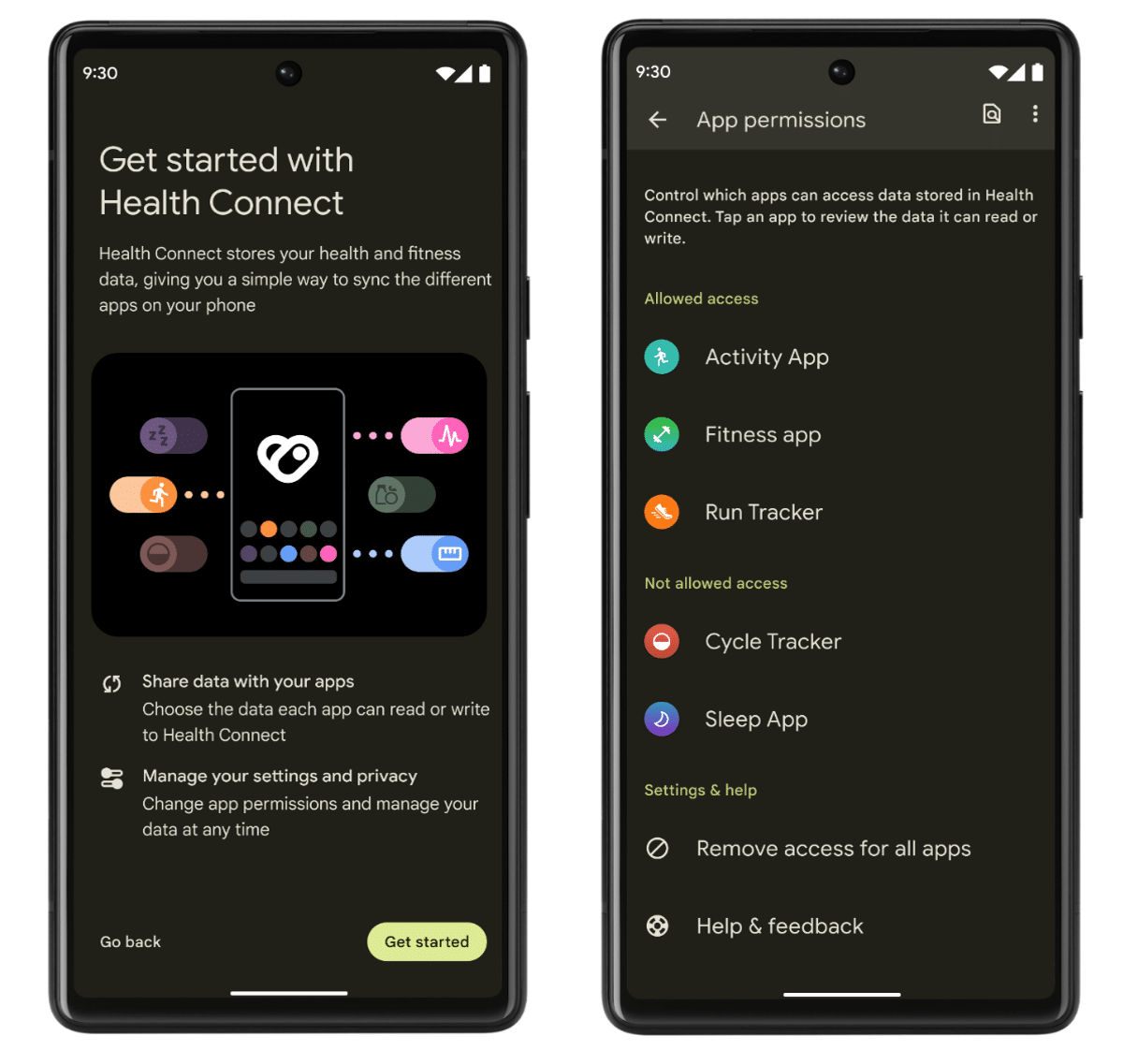
Health Connect is an on-device repository for user health and fitness data.
Another notable change in the new version is the improved means of confirming access to location information. A new section has been added to the dialog box that requests confirmation of location access, providing information on when the application is transmitting location data and details on where to obtain more information about access to the transferred data.
In addition, it's worth noting that in the second beta of Android 14 , support for HDR recording has been expanded to include the ability to receive additional camera information , allowing images to be saved in the "Ultra HDR" format, which uses 10 bits per channel for chrominance encoding. The platform automatically provides HDR output when HDR support is enabled in the application manifest or when Window.setColorMode is called. For separate rendering of Ultra HDR using OpenGL or Vulkan, the gain classmap can be used.
Furthermore, it is also highlighted that the camera extension suite was updated to provide the ability to use more time-consuming and computationally intensive image processing algorithms, for example, to improve the quality of images taken in low light.
For wired headphones connected via USB, the ability to apply lossless audio formats has been added . The AudioMixerAttributes class has been added to the API, allowing you to send audio directly to the device, without mixing, adjust the volume, and process effects.
The types of apps that can display full-screen notifications when the screen is locked have been restricted . These notifications are designed to draw attention to information that requires an immediate response, such as an incoming call or an alarm, so permissions to display such notifications will now be limited to apps that make calls and display alerts.
The animation handling that signals the transition between different screens in the application with a sliding gesture that changes the content has also been improved.
Android Studio already includes an intelligent assistant, Studio Bot , which can generate typical code builds based on a text description of the task, helping to correct errors and providing recommendations on Android development techniques. In addition to the bot, the new version offers Live Edit mode, which allows you to immediately reflect changes made to the code and interface in the application being tested and running on the device.
Of the other changes that stand out:
- Added new components to animate bottom and side screen switching, as well as call quest. Added an API to create your own transition effects in the app.
- Features have been added to predict delays in image processing, get information about processing progress, and quickly get a preview image before the final image is complete.
- A more streamlined and energy efficient SurfaceView preview mode has been implemented.
- Support is provided for using the camera's built-in scaling and cropping capabilities for streamed RAW images.
- Implemented a periodic (once a month) display of notifications warning about changes by apps that have access to location, methods of data transfer to third parties (for example, displayed when the app starts using location data when displaying ads).
- Added hardware accelerated rendering capability to the buffer, implemented through the HardwareBufferRenderer class.
Finally, it's worth mentioning that Android 14 is expected to be released in the third quarter of 2023. If you're interested in learning more , you can find the details at the following link.
To evaluate the new functionalities of the platform, a preliminary test program has been proposed. Firmware builds are ready for Pixel 7/7 Pro, Pixel 6/6a/6 Pro, Pixel 5/5a 5G, and Pixel 4a (5G) devices.